Police Office
The Police Office in Oliver Twist is not a neutral hall of justice but a grim, corrupt, and summary instrument of the law, where the poor are processed with contempt and magistrates wield arbitrary power. It is the site where Oliver is nearly condemned for a crime he did not commit, where rewards are advertised for his capture, and where the machinery of the state ultimately processes Fagin for execution. The novel uses the Police Office to expose the gap between the ideal of justice and the brutal reality of its administration for the powerless.
Location and Physical Description
The most prominent police office in the novel is the Bow Street police office, a notorious metropolitan establishment located near Mutton Hill. Oliver is led there through a back way, entering a small paved yard where he encounters a stout man with a bunch of keys. The building contains a stone cell, described as being in shape and size like an area cellar, but not so light, and most intolerably dirty. The cell had been tenanted by six drunken people since Saturday night, and it is Monday morning when Oliver is locked inside. The narrator compares these station-house dungeons to Newgate, stating that the cells occupied by the most atrocious felons under sentence of death are palaces by comparison. The office itself is a front parlour with a panelled wall, where Mr. Fang sits behind a bar at the upper end, and a wooden pen on one side of the door serves as the dock for prisoners like Oliver.
Magistrates and the Administration of Justice
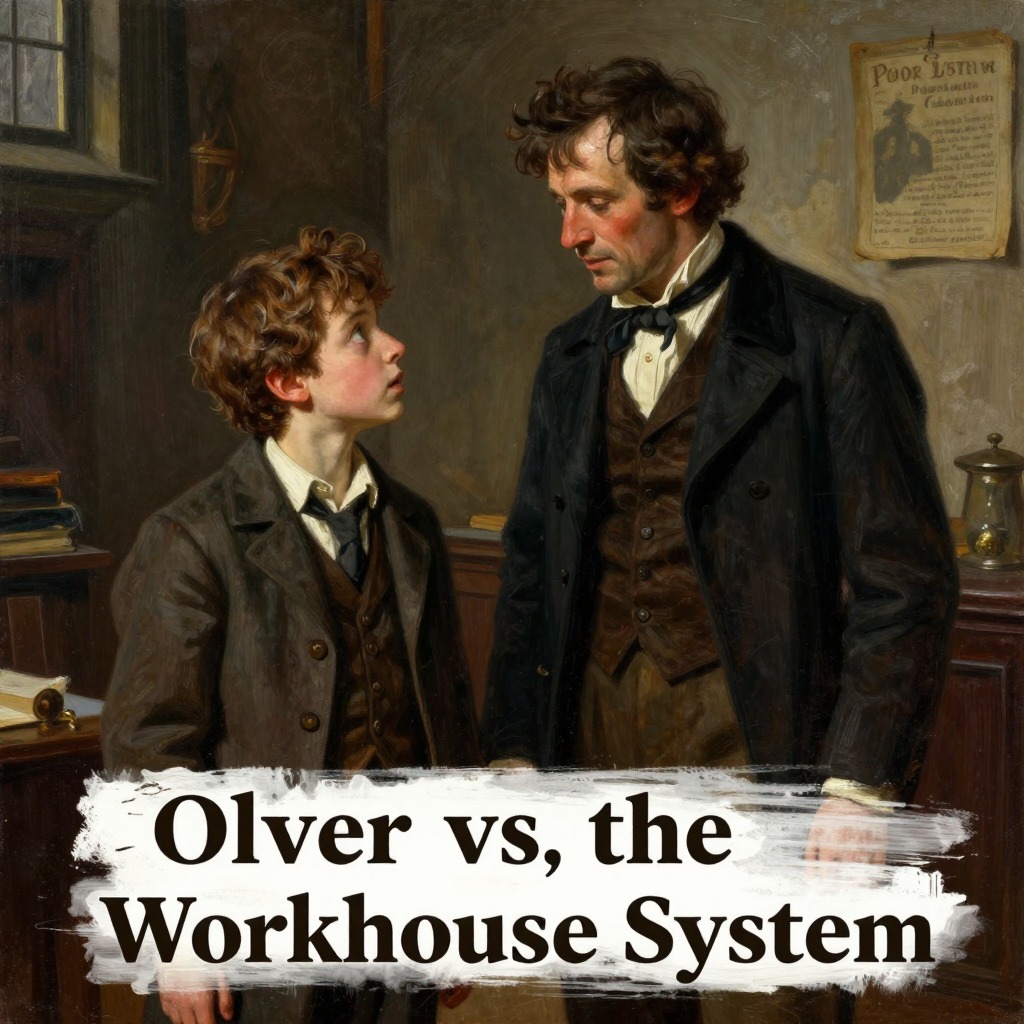
The Police Office is presided over by magistrates who embody the law's capricious cruelty. Mr. Fang, the presiding magistrate when Oliver is brought in, is described as a lean, long-backed, stiff-necked, middle-sized man with a stern, much-flushed face. He is out of temper, having just read a newspaper article that commends him for the three hundred and fiftieth time to the notice of the Secretary of State. Fang treats Mr. Brownlow, the prosecutor, with gratuitous insult, tossing his card contemptuously away and demanding to know "who is this fellow." He refuses to hear Mr. Brownlow's evidence, threatens to have him turned out of the office, and swears the policeman instead. When Oliver faints from illness, Fang dismisses it as shamming and orders him to be left on the floor. He summarily commits Oliver for three months at hard labour, only reversing the decision when the book-stall keeper arrives to testify that Oliver was not the thief. The magistrate then turns his contempt on Mr. Brownlow, accusing him of obtaining the book under suspicious circumstances. The office is thus a place where the magistrate's personal spleen and professional vanity override any genuine inquiry into guilt or innocence.
The Police Office as a Site of Publicity and Pursuit
The Police Office is also a node in the network of public communication about crime. After Oliver's disappearance from Mr. Brownlow's house, an advertisement is placed offering a reward of five guineas for information about him, with a full description of his dress, person, and appearance, and Mr. Brownlow's name and address. This advertisement is what brings Mr. Bumble to Pentonville to deliver his damaging account of Oliver's character. Later, the Bow Street officers Blathers and Duff are sent for from the office to investigate the burglary at Chertsey. The office is thus the point from which official investigations are launched and public notices are disseminated. The crowd's reaction to Fagin's trial and sentence also centers on the police office and the scaffold, with the populace outside greeting the news of his death sentence with a tremendous shout of joy.
The Police Office and the Fate of Criminals
The Police Office is the gateway to the larger penal system. Oliver is searched and locked up in the cell, and the officer in charge refers to him as a "young fogle-hunter" and a "young gallows." The office processes prisoners for trial at the Old Bailey, and it is from here that Fagin is ultimately led to Newgate prison to await execution. The novel's final image of the police apparatus is the scaffold being put up, with the black stage, the cross-beam, the rope, and all the hideous apparatus of death. The Police Office, therefore, is not merely a place of judgment but the first step in a machinery that leads inexorably to the gallows for those it condemns.